
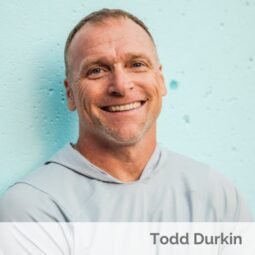
#514 How to Reverse Engineer Your 10-Year Dream into Daily Action (With Fitness Coach Todd Durkin)
If working harder was the answer, why are so many high performers burned out, over-caffeinated, and sleep deprived?
What if the secret to sustainable success isn’t more hustle, but better habits?
In this episode of “Success for the Athletic-Minded Man” podcast, I sit down with Todd Durkin— internationally recognized strength and conditioning coach, motivational speaker, and best-selling author who’s trained legends like Drew Brees, Michael Chandler, Olympic medalists, and top entrepreneurs.
Todd’s reputation is elite, but what makes this conversation powerful is how real he gets about his own battles with burnout, injury, and rebuilding his mindset from the ground up.
After listening to Todd, you’ll walk away with: the 3-2-1 evening routine that fixes your sleep and sets up your mornings, the Productive Pause that turns chaos into clarity, and his WLAGs system— weekly reflections on wins, losses, ahas, and goals— that will change how you lead yourself and your team.
We also unpack how to reverse engineer a 10-year dream into daily action and why scheduling “blue-sky time” (strategic planning) and “mellow-yellow time” (true rest) is the real growth hack most men ignore.
But Todd’s not just talking theory, he’s put together his own October Challenge habits for you to take on.
Join us as Todd and other high performers— Rorke Denver, Dr. Jim Afremow, and Zach Even-esh— share challenges you can choose from, practice daily, and track with the like-minded people who are building momentum before the year ends.
If you don’t have time to listen to the entire episode or if you hear something that you like but don’t have time to write it down, be sure to grab your free copy of the Action Plan from this episode— as well as get access to action plans from EVERY episode— at JimHarshawJr.com/Action.
Please enjoy this transcript of my interview with Todd Durkin
[00:00] Todd Durkin: You know the buffalo is the only animal that actually goes through the storm. All the other animals turn and, and run away from the storm, but the storm follows ’em so the storm stays longer over. The animals versus the buffalo goes through it and they go through it and to it quicker. By doing that, I’m like, be more like a buffalo.
[00:18] Be more like that buffalo that’s attacking the storm. You go at it.
[00:23] Jim Harshaw Jr.: Welcome to another episode of Success for the Athletic Minded Man, real talk on harnessing your athletic drive for clarity, consistency, and focus in business and life. This is your host, Jim Harshaw Jr. And today I bring you Todd Durkin.
[00:38] Todd Durkin is the founder of Fitness Quest 10, a gym in San Diego, California. It’s one of the top 10 gyms consistently named one of the top 10 gyms in America. He coaches elite professional athletes. I’m talking the best of the best Super Bowl champions. Super Bowl MVPs, Heisman Trophy winners, Olympic Gold medals, on and on.
[00:58] He has been named one of the top 100 most influential people in health and fitness. He won the Jack Lane Award on and on. I can keep going. He’s been on 60 Minutes. E-S-P-N-N-F-L Network. Uh, he’s been featured in ESPN, the magazine, men’s Health, men’s Fitness, men’s General, on and on USA today sports illustration.
[01:16] I don’t wanna keep belaboring the point. Todd is absolutely amazing and I wanna get to this interview because if you only have like a half an hour to listen to this, I want you to put this on one and a half speed and make sure you get through this because this episode will change your life. Absolutely fantastic conversation with Todd.
[01:33] Todd was on the podcast years ago. He is one of my early, early. Interviews back in like 2017 and it’s been way too long. He’s been through some stuff, some good times and bad times, and he shares some of that stuff here on the podcast episode today. He’s very real, very open, very authentic, and uh, man, if you listen to this guy.
[01:51] Your life will change. All right, let’s get into it. My second interview with Todd Durkin, and by the way, make sure you share this with a friend. Hit like whenever you see this on social media, retweet it, share it on socials. However you can get the word out about this because this episode will change lives and you helping me grow this show helps me continue to get amazing guys like Todd on the show.
[02:13] Alright, here we go. Interview with Todd Durkin. You’ve been up to a lot, so we’re gonna get caught up on what you’re up to. Let’s start from here though, right? You talk about training for life, right? You trained a lot of athletes, the, the droops, the Mike Chandler, Mike Chandler’s, a friend of the podcast.
[02:28] He’s been on a couple times. You’ve trained these big name guys, he’s big name athletes. What does it mean to train for life, and how is that different and how is that similar than than training for UFC? For the NFL?
[02:40] Todd Durkin: Yeah, no, Jim, what I would say is how it’s different is it’s not different in the sense of our purpose of why we train when we’re training for life.
[02:49] To me and I, I work with a lot of everyday men and women now as well, not just the high level athlete. When you talk about win the day mentality, win the philosophy, like how you do that, it’s. Truly today, how do I train today so that if I can win today, tomorrow, all week, all month, all quarter, all year, and I just keep repeating that.
[03:12] Winning in life to me is just a matter of the discipline, to do the habits on a regular basis, consistent basis, day after day, to do the right things most days of the week. To me, that’s how you train and win life. Is in the daily and just even this morning I was journaling. It’s like what can I do today to maximize my impact today?
[03:32] Which matters most.
[03:34] Jim Harshaw Jr.: Yeah. Tell me, tell me about the daily habits ’cause that’s what this comes down to. Well, I’ll talk about like, like big picture vision ’cause I know you have some thoughts on that sort of 10 year vision, but like the daily habits, I have this concept that every podcast listener who’s ever listened to some of my episode knows and that I talk about.
[03:49] And I really think this is the, the root of all success. ’cause I’ve. You know, 500 and some podcast episodes and guys like you and Navy Seals and Olympic gold medalists. On and on. There’s one habit. That keeps coming up over and over and over, and they talk about, I say, what’s the one habit that you most credit for your success?
[04:04] It’s never doing the thing right for the Olympic gold medalist. It’s never the training habit for the New York Times bestseller. It’s not some kind of, you know, writing routine. It’s always some version of, you know, journaling or working with the coach or. Doing some kind of retreat. I know you have your retreat coming up in Whitefish, Montana in November.
[04:22] That is open to the public and open to every listener here, like it’s doing these kinds of these. Step back, remove yourself from the chaos of life, get clarity, then reengage. So anyway, the concept I’ve coined is the productive pause. And the productive pause is defined as this. It’s a short period of focus, reflection around specific questions that leads to clarity of action.
[04:44] And peace of mind. So talk to me about your jour. Like what do you mean? Like when you journaled this morning, like what, what does that look for? Todd Durkin?
[04:50] Todd Durkin: Well, I just pulled my journal out because this is my journal. I, I’m holding it. If you’re, if you’re watching, if you’re just listening. I’ve always been a believer in journaling.
[04:58] I was never really that consistent in it until I hit the wall, uh, three years ago, three and a half years ago. Or so I was in a really, I’ll say tough spot, you know, I won’t go through all of it, but my back flared up. I had my second knee replacement surgery, I had all this stuff going on, Jim, and I was battling.
[05:17] Battling and I’m the, uh, you know, the king of get your Mind right. I wrote a book called Get Your Mind Right. I’m like, and all of a sudden, Mr. Get Your Mind right? Mines wasn’t right. And I’m trying to survive and get through this difficult season of my life, three and a half years of it. And I got back to some of the basic things that even I’ve been preaching about doing and I was doing just not to the level, uh, of I’ll say habit, meaning this.
[05:43] My morning routine. I’ve always been a morning guy as far as my routine, and I know it’s kind of ambassador ized now with the morning routine, but you know, I have a holy hour from about five to seven. I call it a holy hour. It’s really like two hours, but it consists of many things, one which is journaling, and what I learned during this time was this.
[06:01] I had my morning routine down. What I didn’t have down was my evening routine and the day starts the night before. So what happened was I actually created this journal, I called the Impact Journal because what happened was I was doing my journaling, but I have my morning journal. And then I have an evening journal and there’s different prompts.
[06:23] So here’s why I say that, because I was so busy in my mind, I couldn’t relax. I wasn’t sleeping good. And when I wasn’t sleeping good, it affected my morning routine and I was all off kilter until I was diagnosed with this thing called sleep apnea. About two, a little over two years ago. I was lost, brother.
[06:43] I was like, what is going on? I’m doing my morning routine. I’m working out, I’m journaling, I’m praying, I, I, I’m trying to stay focused on this stuff. I and I, my knee flares up. They have the second replacement. I got the back injury. My mind’s not right. I’m like, wait a second. I’m supposed to be the king of all this stuff, and now I’m falling apart, like, what’s going on?
[07:03] And. It really was that diagnosis of the, of the sleep apnea that got me back on track. ’cause when I got treated for that and got consistent with my habits and routines, backing all the way to the evening. 3, 2, 1, 3 hours before you go to bed, eat two hours, cut off work, one hour self-care the last hour.
[07:22] That means cutting off your phones, cutting off the tv, stretching, meditating. Like the stuff that I do now. My evening routine is as important as my morning routine. That’s what I’ve learned as far as like my own habits because that’s now set me up for a good night’s sleep. I’m getting my seven hours, which I wasn’t sleeping very much at all for years, and like
[07:46] Jim Harshaw Jr.: if you don’t sleep, you’re no good.
[07:49] It’s one of the core habits I always tell people. Exercise, nutrition, sleep. Period. If you, if you just get those three, you can build the rest of your life on top of that, you’re at least gonna be able to show up in a decent place. Yeah. Well, Jim, well what happens was,
[08:02] Todd Durkin: we all know we gotta work out. So I wasn’t sleeping, but you gotta work out.
[08:05] So I just pound caffeine. I would absolutely just crush the caffeine ’cause I was so exhausted and tired and burnt and everything else like, but I gotta work out to get my mind right. So I would, I’d pound caffeine, I’d do everything I could to work out and I would work out and I’d feel better. But I had a lot of caffeine in me and I was exhausted.
[08:26] All the time. Not a good combination that you, when you’re relying on caffeine yet, you have to have the caffeine, massive amounts of it to function. So I did this like three and a half year of experiment on myself of like getting my own self right. And here I am, a performance coach and I’m coaching people.
[08:42] I’m training some of the world’s best athletes, but internally. I’m like, man, I’ve never felt this in my 25 plus year career. I’ve never really experienced this level of depth that I had to battle through to get to
[08:58] Jim Harshaw Jr.: the other side. And when you’re going through it, man, it’s tough. So for the listener, if you know Todd, if you, if you follow him on Instagram or social media, which you should.
[09:07] Like this guy’s fired up and man, he’s living life. He’s maxed energy. And to see and to know, like we’re getting to hear, you know, behind the curtain, like the reality is like we look on social media, everybody’s life’s perfect. It’s easy for Todd. Like for Todd, like Todd’s just man, he’s just wired right?
[09:24] And, you know, everything’s easy for him. And, you know, that’s not the reality like Todd is doing to, to have the, the number of businesses Todd has to, to have one of the top gyms in America. It takes this kind of work. It takes going through dark places. It’s hard. And there are systems and processes and routines and habits that he does that.
[09:46] Uh, again, speaking to the listener. You’ve heard me talk about this stuff before. You’ve read the books before. You know that there’s these things out there, but are you doing them because Todd is doing them and look at where he’s at.
[09:59] Todd Durkin: Yeah. [10:00] Well, Jim, thank you. I always say this, when you’re going through a storm and everyone’s got something, everyone’s got something.
[10:05] Whether it’s you, your, your spouse, your kids, like everyone’s got something they’re dealing with. And on the outside it sometimes looks good for everyone else. And the truth of the matter is everyone’s got something for me. I wanna make sure I’m real clear on this, like my faith got me through. A very, very difficult time in my life.
[10:21] I was always a, a man of faith, but never tested like I had been tested for the length of time I was tested. When you asked me the one thing that got me through a dark time. It was really leaning in on my faith. Now I understand why, because of what I’m up to. These days when people are like, if they don’t know me, they’re like, oh man, you got a lot of, a lot of good stuff going on.
[10:40] I’m like, man, you wouldn’t wanna go through what I went through to get to where I’m at, and I’m not done yet, because I do believe that until you’re dead, we’re not done. And the best is you get to come. That’s the mentality of what we need to have. I shared this story yesterday. I spoke at Pastor Jeremiah’s school, like a thousand kids, and I said this to the story of a buffalo.
[10:57] You know the buffalo is the only animal that actually goes through the storm. All the other animals turn and and run away from the storm, but the storm follows them so the storm stays longer over. The animals versus the buffalo goes through it and they go through it and to it quicker. By doing that, I’m like, man, be more like a buffalo.
[11:14] Be more like that buffalo that’s attacking the storm you go at it. So if you’re battling today, if your mind ain’t right, your soul ain’t right, your body ain’t right, you got injury, whatever it is, like address it. Don’t run from it. ’cause when you cover it up or you run from it, it only eats you up even deeper and further.
[11:31] Talk to someone that’s been through something like yourself, whether it be a therapist, a coach, something like you, Jim, myself, a comrade, a colleague, a mentor, a pastor. Find someone in your. Inner circle that you can talk to and lean in on and lean in and share it. ’cause especially men, we’re not good at sharing our guts.
[11:49] Man, I didn’t wanna share this stuff with my athletes when I’m going through it. No, it’s not about me. I’m gonna, I’m gonna train them and I’m gonna, I’m gonna get outta there. And that’s what I, you know, it’s, we
[11:57] Jim Harshaw Jr.: can’t do it enough, share it. And my whole coaching framework and processes based off of. The life of an athlete.
[12:03] And when you’re an athlete, you have coaches, you have people around you, you have a support system. Again, you know you’re working with these professional athletes. My life is a, in your life as a college athlete, like as athletes, we, we had this support system, we had this infrastructure. We have coaches and academic advisors and nutritionists and sports psychologists and athletic trainers and strength and conditioning coaches.
[12:26] Like, well, people go through the world, men especially, and they go, nah. I’m just supposed to figure it out on my own. I can’t talk to anybody about this. I’ve gotta no, like, man, one of the biggest things I’ve breakthroughs, aha moments I’ve ever had in my life is like realizing that all these successful business men and women and people in life who I know, like they’ve got somebody in their corner, they’ve got, you know, more than one person, right?
[12:51] They, they have the pastor maybe in their faith, they’ve got their, their business coach, their mindset coach. They’ve got. You know, a, a good doctor, whatever, therapist, counselor, marriage, the, whatever it is, like you kinda get the support system. It’s not about doing it on your own. The droop breeze is Michael Chandler of the world.
[13:07] Like they didn’t get there on their own and neither should we.
[13:10] Todd Durkin: I always say this, everyone’s got a dude or everyone needs a dude. What I mean by that, I played for this high school football coach. His name is Warren Wolf. He’s legendary in New Jersey. And I really understood this later in life, but he had this guy named Bear.
[13:24] Roberts Bear was our quote, I’ll put it, air quotes, he was our trainer. There was no athletic trainers back in the, in the eighties. Right. Like he just rub some dirt on and get back out there. Right. But that was Coach Wolf’s. Guy and everyone’s got a guy, or everyone’s got a gal. Like if you’re a gal listening in today, like everyone needs someone in their life to be their cheerleader, their encourager, their motivator, their lifter upper, or someone that keeps it real when things are going good to bring you back down to earth like everyone needs a guy or a gal.
[13:53] I learned that from Coach Wolf ’cause I saw him around Bear Roberts and we always need someone. Ideally it’s several, but you need that one person. Who can really call an ace and ace a spade, a spade of like what’s going on and lift you when you need to be lifted and pull you down if you ever need to be pulled down on that.
[14:11] But it’s a great point, Jim, because all of us need someone, uh, in the good times and also in the tough times.
[14:17] Jim Harshaw Jr.: Yeah. I, I, in my email subject line, I, I say this, I say, we all need somebody in our lives who holds us to a higher standard than we believe that we can attain. We need somebody who holds us to that standard.
[14:29] I mean, I remember this one wrestling coach I had when I was in college. His first day he showed, he’s our assistant coach. His first day I’m in the weight room, I’m on the low row machine. I do, I sit down and do my set of 10, you know, I just, just do my set. So says 10 on the sheet. I’m gonna do 10. I did 10.
[14:44] He goes, sit down. I don’t even know this guy. I barely, I hadn’t even met him yet. You know, sit down. I sit back down. He pulls out the pin, drops it down like five blocks. He goes, now go. And I’m like, okay, well I don’t know if I can get ’em all in good set. You know, I don’t care if he’s like, get as many good reps as you can and then just grind out the last few, even if they’re like, it was just a, it just a mindset shift.
[15:04] Just a, somebody said, Nope, you’re setting the bar here. You need to set the bar here. You have more potential. And had it not been for that moment and that person, his name’s John McGovern, he’s the head wrestling coach at Dubuque University now. You and I probably aren’t talk,
[15:17] Todd Durkin: you
[15:17] Jim Harshaw Jr.: know, to be honest.
[15:18] Todd Durkin: Do you remember the coach, uh, Tom Landry?
[15:20] Of course. So Tom Landry said this once. I’ll never forget it. It’s a great quote. He said, great coaches tell you things that you need to hear, not that you want to hear, so you can be all that you’re meant to be even though you’re not there yet. I’m like. That’s what great coaches do. That’s why all of us need a coach in different areas of our life is the great coaches tell you things that you need to hear, not that you want to hear.
[15:41] She could be all that you’re meant to be, even though you’re not there yet. That means the best is yet to come because great coaches around you. I’m like, man, that is so good. And I think some of the relationships that. You know, that I’ve developed over the years and, uh, I train a lot of my athletes for, well now decades.
[15:55] It’s because when you keep it real for people you train, it doesn’t need athlete, entrepreneurs, executives, moms, dads, grandmas, grandpas don’t matter is we all need those people around us who are gonna keep it real and share and coach with us the way that things need to be told.
[16:10] Jim Harshaw Jr.: Yeah, so the challenge can be then taking these daily habits and connecting them to something bigger, right?
[16:16] It’s like, okay, I’m doing the daily thing. If you think about the book, seven Habits of Highly Effective People, start With the End in mind, you’ll begin with, the end in mind is one of the seven habits, and then we also hear about focus on the process, not the outcome. Right. How do you balance that? And for me it’s like, you know, you start with the end of mind and you, and you create the process, but how, how do you think about that?
[16:38] How do you think about designing your daily habits, structures, routines that are going to get you wherever you wanna get to?
[16:46] Todd Durkin: Yeah. And, and it is a, a, a double entendre because you, you mentioned earlier on about. This Montana retreat I’m doing. I think the, the, the most important thing that any one of us can do is to make sure we’re dreaming because dreams provide us the energy that’s necessary to live in the daily and the regular that is going to give us the juice to keep going.
[17:08] I, it’s amazing the amount of people who I coach now who are in their forties, fifties, sixties, heck, even the eighties, who don’t know, who no longer dream they don’t have it. I’m like, what’s your dream like. That’s a good question. I haven’t thought about that way. I’m like, what do, what do you mean you, you have to have a dream.
[17:25] You have to have something to keeps you alive on the inside. Like, what is it that you’re going for? And it’s more than just making a certain amount of money. I hope you’re making good money, but there’s gotta be this dream of what are you gonna do with the money? How are you gonna impact society? What are you gonna.
[17:37] So I think the dream keeps us alive, and I think in order to have that dream, you step away from the regular minutia of everyday life, whether it’s the mountains or whether it’s the beach, or whether I call it blue sky time. You need blue sky time and mellow yellow time, those two blue and yellow. Are really good for your soul.
[17:56] ’cause when you get your soul singing now, when you’re working on the process, the daily work and grind that’s necessary, you’re focused on what needs to get done today in order to fulfill that dream or get closer to living your dream. So part of what I’m talking about, and I have this thing called your annual strategic plan, and the beginning of every year, the end of every year, people work on their strategic plan.
[18:18] When they’re working on their planner, and these are all about dreams, but all the way down into the daily, these are the steps that you can take in order to fulfill your dream. It, it says, you know, today I will do what others won’t, so tomorrow I can do what others can’t. So what are you willing to do today that’ll get you down, down the line tomorrow, next year, in a decade from now?
[18:39] But you gotta have that dream. You gotta have the dream. So it’s that, it is that dream aspect, but also bifurcating your brain and your mind into saying, okay. I have a dream, but I’m not living in, in fairytale land where just ’cause I’m thinking it, it’s gonna happen. No, no, no. You gotta think it, you gotta dream it, you gotta believe it, you gotta speak it into life, but then you gotta do the work.
[18:59] You gotta actually sit down, roll up your sleeves and get to work and, and then some
[19:03] Jim Harshaw Jr.: Todd, I talked to so many guys who would listen to this and say. That sounds like a great idea. This annual strategic plan, I mean, it’s essentially what I do with my clients, you know, it’s like this an, you know, this life strategic plan essentially, and then we break it down to annual and then monthly and then these habits and, but I’m busy, Todd.
[19:21] I’m busy. I’m too busy. I got kids, I got a job, I got, you know, I can’t even get my workouts in and you’re sitting here telling me you got your holy hour or two hours, like, Todd, I’m just too busy. I can’t do that. What do you say to that guy?
[19:34] Todd Durkin: I hear that a lot, and one of the things that one of my pet peeves is when someone says to me, I’m, I don’t wanna ask you this because you’re so busy.
[19:42] I’m like, I’m no busier than anyone else. And Jim, you’re no busier than anyone else because we all have 24 hours in a day, seven days a week, no one’s busier than anyone else. Everyone’s busy. It truly is, where are you gonna invest your energy, not just your time, your energy. Like if I told [20:00] you that. You’re gonna lose your health.
[20:02] Guess what? You’re gonna invest all your time and energy right now making sure you don’t do lose your health because he or she who has their health has a thousand dreams. He or she does not has one. I want my health. Until you lose it, then all of a sudden becomes your priority. So I’m always like reminding people like get you gotta make sure you’re, you got your physical health, your mental health that comes from working out.
[20:21] It’s a priority. You have to have your workouts. I don’t care if your back is shot, you gotta knee replacement. Do arms. Do. Do your upper body or do your lower body find a way to move. We no longer work out for six pack abs. We work out to get our mind right in the field, the energy that’s gonna give us the life that’s necessary to be a good father or spouse or a good parent.
[20:39] Like, I’m like, listen, and this is, as a coach, I’ll say it’s an excuse. Let’s reprioritize your life, reprioritize your life to make sure it’s a priority. What are your top three to five things that you need to get in and your health better be one of them. It’s not always working out. It could be meditating or making sure you get a walk in with a pop, but like getting quiet time, like your health is number one and we all know that, but we’re too busy because of all the things that pop up.
[21:07] Distractions, especially now with the phone and social media and everything else. Everyone’s busy, but like. I would say then be more selfish with your own time. I don’t care if it’s five in the morning, five at night, 12 noon, it doesn’t matter. Find the time for you. I don’t care if it’s 30 minutes or an hour, hour and a half, two hours, whatever.
[21:24] Whatever you need to do to get you right, you need to be right in order to help the rest of the world, including your own family, be the best that they can be. But it starts with you. If you’re no good, no one else can be good either.
[21:34] Jim Harshaw Jr.: Yeah. Put your own seatbelt on first. Starts with health and fitness man.
[21:38] How do you reverse engineer success? You have a dream, okay? Let’s say the guy listening says, okay, all right, I got this dream. I, you know, now that I think about it, there’s this dream in my head. How do you reverse engineer the, the dream that might be, I don’t know, 10 years out? How do you reverse engineer that to, there’s today, right?
[21:57] There’s the habit like, okay, I gotta work out tomorrow, and then there’s the 10 year dream of like building that business or buying that home or whatever that might be, right?
[22:04] Todd Durkin: Yeah. You know, this is, it’s a great question, Jim, and so you all know, like Jim didn’t tell me the question in advance, and he doesn’t know this.
[22:12] I don’t even think you know this, Jim, but I have created this annual roadmap and strategic plan and it’s an actual product because for. Almost 20 years. I have been doing that because one of my mentors, many moons ago taught me about the, the importance of reverse engineering. So I created this product that I used to just use with my coaching clients, and now I just put it out there.
[22:34] It’s like 30 bucks or something like that. And I reverse engineer to what you were saying earlier on about like your life, your year, your 90 days into your daily. You have to write it. Writing creates clarity. Clarity precedes genius. So when you pick up your annual strategic planning and you write it, you write it down, and then you share it with your inner team.
[22:55] Could be your spouse, it could be your, your gm, CEO, or whoever it is that you work with, and you share it with the people who are gonna hold you accountable. When you write it down, it becomes. Real. When you speak it into life, it becomes real. And then when you start taking action on it becomes real. Now, truth be told, I spent about 15 to 20 hours.
[23:14] Usually at the end of the year working on my strategic plan, but then I revisited every quarter and updated like we just, you know, right now we’re getting ready to go into Q4 here. So we wanna make sure we finish Q4 strong and set our Q4 initiatives, but then we’re gonna be in another, well starting in November 13th, we’ll be working on our 2026 initiatives.
[23:35] How does it happen? You systematically reverse engineer with questions. In reverse all the way back down into what do you want personally, what do you want professionally? What do you want relationally? What do you want with your adventure? I have a 10 forms of wealth. Wealth, not meaning money, but wealth, meaning harmony, um, in your life and what are you gonna do with all of these different aspects?
[23:57] And you just reverse engineer it. You write it down, and then you put asterisk in bullets, and then you look at that versus here in my home computer, you print it out and you look at it daily, not once a year, daily. Because it’s like a pro athlete, Hey, I wanna be the best in the world in this game. Like LaDainian and Thomason told me my my first, Hey, I wanna be the best running back to ever play the game.
[24:18] Oh, do you? Alright, let, let’s, let’s do it then. It’s one thing to say it, it’s another thing to say, okay, we’re not only gonna show up and be on time every single time for these next nine years, but I’m gonna have you do these writing exercises and you’re gonna write ’em out of what you want and he’ll do it.
[24:34] And he will, you know, when you, when you think it, you write it, you speak it. You do it, then you’re more likely to make it happen. Most people just think it, ah, I wanna be a millionaire, I wanna be this. Okay, cool. So does everyone else. But if you actually put it down on paper, you look at it, you speak it.
[24:53] You do it now, you’re more likely to
[24:56] Jim Harshaw Jr.: potentiate that this is the productive pause. Productive pause. This is not doing, this is doing the, the work that precedes, as you said, genius. This is clarity. You gotta, once you get cla, when you put pen to paper, when you hit the pause button, not hustling to work, you know, not, you know, making the sales calls or doing the reports or, you know, watching TV with the family.
[25:19] Right? Like, not that like stop. Extract yourself from the chaos, from the busyness, get clarity through these questions that Todd’s talking about. Then you can engage and, and now, now you start doing the thing and, and, and this, this is what I call the difference between hard work and inspired action, right?
[25:38] Hard work is just hard work. It’s digging a ditch and it’s really hard to do. But when you look at a guy for the listener, like when you look at a guy like Todd and a guy, to be honest, like I’m the same way. I do a lot of things that other people go, man, that looks like really hard work. It’s like, well, maybe it is.
[25:54] But to be honest, it’s, for me, it’s inspired. It comes from within. I can’t not do this. Like when I was wrestling, you know, losing 22 pounds and two and a half days once, like, did that suck? Yeah, it absolutely sucked. Was it hard? Like most humans could never do that to themselves voluntarily? I did. And lots of other wrestlers have done this.
[26:14] I’m not the only one. But it’s inspired. It’s inspired because this is who you are, this is what you do. This is for a purpose. There’s a reason you’re doing this. So now you can go through what to other people looks like pain and suffering, but to you is inspired action. It starts with clarity.
[26:30] Todd Durkin: Yeah. Jim, so good.
[26:32] So good. You know, if I could just speak for a moment to all the. The men and women out there who are working their tails off. And literally, whether you come from a football background like myself, a wrestling background like yourself, but, you know, many of us were born and raised with hard work is gonna get you to where you want.
[26:47] And it’s true, you gotta work hard. But a mentor said something to me once, I’ll never forget. I, I remember exactly where I was standing when he said it to me. It was like him punching me straight in the face. He said, listen, he said, you can’t work anymore any harder than you’re already working. I was about five years in, uh, owning my first gym and, and things were going well.
[27:05] But I was working seven days a week and I was putting a lot of time in. He said, why are you doing this? Why are you, why are you working the way you’re working? Because you’re going from 6:00 AM till seven at night, six days a week. And then the seventh day you’re out teaching three classes. And he said, listen, if you don’t change, you’re gonna end up like your father dead at the age of 58 of a heart attack.
[27:31] Jim, I, I swear I felt like this wind come across me. And I was, you know, in my late thirties, early forties, and I was like, holy, she, I said, well, what’s the answer? Like, you gotta work hard. That’s, that’s the, that’s gonna separate us. He goes, yeah, you do have to work hard. But he goes, let me teach you something.
[27:47] He goes, and this is a big part of what I’m gonna talk about, the strength strategic plan and everything else, is I’m gonna go deeper with you ’cause I know your people can handle it. He goes, there’s four colors and I want you to live your life in four different colors. There’s red, green, yellow, and blue.
[28:02] Red, green, yellow, and blue. He said, if you are working this hard to make more money, you’re doing it the wrong way. You can’t work any harder. You can’t, you’re not gonna make any more money doing what you’re doing. He goes, if you wanna make more money, you need more yellow and blue in your life. I’m like, what’s yellow and blue?
[28:19] He said. Blue is blue sky time that’s working on your life. That’s when you sit down and you strategically work on your life and you can’t do it at home. You can’t do it in the office. You gotta get away for three days out of every 90, get away and work on your, your life and business. I’m like, okay, if that’s the blue, what’s the yellow?
[28:39] He goes, that’s called mellow yellow time. I’m like, mellow yellow. What’s that? He goes, that’s when you actually go to the mountains or you go to the beach or you actually don’t think about work and you don’t even work on work. He goes, but that’s when all your big ideas happen. He goes, when you’re getting mellow yellow time, that’s how you get your big ideas.
[28:55] So I’m like, you’re telling me that’s you? How you make more money? He said, yep, exactly. You don’t get enough mellow yellow time and you’ll get enough blue sky time. You keep working your tails seven days a week, and guess what? You’ll keep doing good, but you’re never gonna get to where you want even financially or even to that next level of legacy if you’re not getting a blue sky or mellow yellow time.
[29:15] And Jim, I swear, it felt like he hit me right between the teeth because I was already doing that for years. I’m like, I gotta change. That’s why when you talk about reverse engineer, I wasn’t planning on going there today, the depth of this, but now I structure my life. I do it in the strategic plan of like, man, you better have your mellow yellow and your blue sky time down on your calendar of when otherwise, guess what?
[29:37] Work fills it up. We just work. That’s how we’re programmed. I’m programmed that way to this day, I’m still programmed that way, but if you don’t prioritize mellow yellow, blue sky, you’re gonna lose your family, or you’re gonna lose, you’re gonna lose your health. You’re gonna, you’re gonna lose everything that’s important to you, but you are working,
[29:54] Jim Harshaw Jr.: you’re work.
[29:54] You lose your dream. Well, you’re working hard, and, and the listener, Todd Durkin. [30:00] Puts these guardrails in his life. Do you have those guardrails? Do you have those guardrails that are in place that I I say this with my clients, they don’t let you drift down to default. Right? I have this eight week coaching program at the eight, eight end of the eight week coaching program.
[30:15] It’s like, you know, you can, you can either drop out of the program ’cause you finished the, so you know, the so-called course or therefore drift back down to default. Or you could keep these guardrails up and we’ll get, you know, the sky’s the limit for you. And yeah, that’s why we have hype guys who have been with me for a decade, literally a decade.
[30:33] Like this is a way of life for them.
[30:36] Todd Durkin: It’s what you’re preaching all the time, Jim, you, you do it all the time. You do a great job with your people and that, but that’s just something I’ve learned along the way, that you gotta just stop every now and then and, and default back to your best practices of what you do because it’s easy to get side railed too.
[30:49] And next thing you know, you just, you’re busy again. ’cause you get caught up in the next project or the next proposal or initiative that you gotta do. And then. You gotta just, every now and then recalibrate
[31:00] Jim Harshaw Jr.: and renew. So here’s another question about recalibration renewing productive pause that, that I know is a concept that you, you, you’ve created.
[31:09] What are W lags? What’s a w lag
[31:13] Todd Durkin: will talk about reverse engineering. You start with your annual strategic plan all the way down to your annual plan, into your 90 day wonder, into your three 10 forms of wealth in three and 30, which is done on a monthly basis versus quarterly basis. My w lags. Again, reverse engineer all the way down into the daily are My weekly is my weekly coaching I do for myself and what it stands for.
[31:34] It’s an acronym. I love acronyms like Impact is an acronym, but WA stands for this every Sunday for about 30 minutes. It’s a form of journaling that I do and I reflect on the last past week and I write down my wins from the past week, my losses from the past week or challenges my aha moments from the past week.
[31:56] And then my goals for this upcoming week, what I must accomplish this week. Now, why is that important? Number one is because most of us are always looking forward to what’s coming up this week, and we don’t stop and reflect on this past week. You probably had some wins in this past week. You have when you actually write ’em down.
[32:13] You take five, 10 minutes to write ’em down. Your losses doesn’t be major losses, but they could be challenges that you’re facing, whether it be an employee or a situation with a customer or something personally that you’re dealing with. So you write ’em down. Again. It’s part of the cathartic release on the paper, which makes it easier to move on the aha moments.
[32:34] This is the key. I am a better person when I’m more. Present in the now. So right now the only thing that matters to me is this conversation with you, Jim. ’cause I’m extremely present. I do believe that presence is something that’s missing in today’s day, especially with the younger generations. I’m always on my kids like, Hey, this is how you become more present in your conversations.
[32:54] ’cause it matters when you know people are with you right now, but your aha moments happen in the most. Opportune times, but don’t seem like it’s a big deal. It could be a conversation I had with a stranger at the store. An aha moment could be something that quote just coincidentally happened and that an aha moment might be, I didn’t realize that this person was gonna call me and provide me this opportunity.
[33:21] You write ’em down and you realize, you know, I had five ahas this week, or I was reminded of a lesson in life about customer service or whatever it is. And then finally, the goals. Listen, we all have like 50 goals for the upcoming week and what we wanna do, just put down your top five to seven goals that you must do this week.
[33:40] And if you get done these goals, when I look back the following Sunday, hopefully it’s a win. ’cause if I’m doing five big wins a week. It’s gonna be a winning week. You win your week, you win your month, you win your month, you win your quarter, you win your quarter, win your year overall. Boom. Are we gonna have losses?
[33:54] Absolutely. Now here’s the key with this, Jim. I take my W lags and I share it with my team. I ask my team to do the same thing. Maybe don’t put as much time into me, but can you take five, 10 minutes, do your w lags and share it via email with me every Sunday night? And they do. And here’s why. It’s not about the goals.
[34:10] And professionally, what do you need to accomplish this week? And I’m gonna micromanage what they’re doing. What I really am looking at is losses and ahas. There’s a loss and there usually is a loss or a challenge somewhere. If they’re not, then they’re not being real. And the ahas, when I go see them that following week, guess what I’m gonna ask ’em about?
[34:29] Hey, I got a guy, a gal right now on my team whose daughter is dealing with drug issue. I’m gonna ask them about their daughter and how she’s doing. Not about did you get a certain amount of sessions in this week? Like it becomes a different level of relationship. So now the communication helps foster a deeper culture on the team.
[34:49] So, culture, leadership,
[34:51] Jim Harshaw Jr.: this is about people
[34:52] Todd Durkin: relationships. Absolutely. And I’m gonna, I’m gonna deal with this person, understanding some of the stuff that they share. If they don’t share it, I don’t know it. So how am I gonna be a good leader or boss or whatever if I don’t even know it? But if they share it, I can.
[35:05] In the morning, I could pray for them. I could talk with them and say, Hey, if you need me, I’m here for you. I totally get how you’re bifurcating. You know all that’s going on personally with doing your job. Thank you for doing a great job. I’m here for you. Like that level of communication just tells them, Hey, he actually cares about me, which doesn’t happen most times.
[35:24] So my WS has been. A weekly practice for over a decade, and it’s changed my life. I mean, literally for over a decade I’ve been doing that and people are like, man, it takes a lot of time. Guess what? It doesn’t it, it takes you somewhere between 10 to 30 minutes. You could do it while you’re watching a ball game if you want to, but it’s the mere fact that my team now expects or anticipates my w as coming through every Sunday night.
[35:49] And it’s part of my practice because they see where I’m at and guess what I’m gonna share that they don’t care if I win another award. I go do this or that. Like all that’s cool. What they really are looking at, they’re looking at losses and ahas. Am I real? Am I dealing with any physical pain or a, a challenge in how am I gonna deal with this challenge coming up?
[36:08] Or this, or an aha of an aha that I just had of, you know, whatever it may be. And, you know, every week I have ahas. If I went to a workshop or I went to a program or a meeting or something like what has come up that I can share that is going to make a difference in their life? Well now all of a sudden it’s a whole different level of.
[36:30] Communication and leadership.
[36:32] Jim Harshaw Jr.: You just jumped into it. You know, communication, leadership, you know, for anybody who’s listening, who’s in some kinda leadership role, founder, CEO, vp, whatever it might be, entrepreneur. You think about retention, you think about team performance, all of that. I mean, this is, this is where this stuff comes from.
[36:50] You can read the books, you can, you know, learn all these different things. Like this is a simple tactic that, that Todd’s done and you, and you wonder why, you know, people love him and wanna work with him and, you know, and he, he’s been so successful. It’s like, well, you know, success leaves clues.
[37:03] Todd Durkin: Yeah. I mean, exactly.
[37:05] Right. An example might be that I’m just looking at mine here, uh, on my screen as this from last week’s. And these are just random thoughts, but they’re aha. Thoughts that might come from a podcast. You may have an aha right now as I’m speaking, that has nothing to do with what Jim or I are saying, but the fact that you’re listening in a rarefied air while you’re out for a walk, jog, run, whatever.
[37:23] It’s like, here’s another one I put last week. It’s gotta be a big idea that you, your team, and your customers can get in seconds. That was your thoughts and aha. You must charge a premium price so you have a large margin providing extraordinary value and experience. You get to make the rules for your business.
[37:37] Don’t let industry norms dictate how you’ll work or who you’re gonna work with. These are just like thoughts that I have. I wanna read all your aha moments, man. That’s gold right there. Well, that’s just this week. I’ve got like seven of them. I, you know, that’s a good idea. I should take all my ahas from over 10 years and put ’em into a book.
[37:53] Ah, that’d be freaking awesome. But that’s the thing, like you have the same thoughts every week. You have the thoughts. I’m like, get your thoughts on paper. Are you capturing those throughout the week or do you sit down and go, okay, here are the ones I had? Good question. Usually I start it on Saturday, my ahas and I think back ’cause I don’t have enough time, but.
[38:13] Every now and then if I have a deep aha, I forget my ahas. ’cause I’m like, it’s Tuesday. I’m listening to a podcast and I get an idea like, people here today, you get an idea, has nothing to do with what we’re talking about. And it’s just because of the vibration is deeper. So I do occasionally in my notes section on my phone, if I have a thought that’s kind of like, aha, I need to make this move.
[38:35] I’ll write it down. It’ll either become a to-do or it’ll become an aha. It might become an action step I need to take action on. Or it might just be an aha. Like I want to have a, you got a challenge coming in up, up in October. I know. So like, Hey, I got an aha. Like how could I help you be successful in that?
[38:52] Aha, I got an idea. So we get ideas all the time in, in a week. How could I actually turn those ideas into action? Because ultimately, at the end of the day, it’s the action that matters the most.
[39:03] Jim Harshaw Jr.: Yeah, man, this is beautiful. Todd, what are you working on right now? Man? You got some things going. You got your mindset, you got your Get your mind right.
[39:10] Coaching certification. You got your impact life coaching starting soon. You got your retreat, you got your impact X performance and fitness recovery franchise. I mean, you got all kinds of cool things going. Talk to us.
[39:23] Todd Durkin: Yeah, thanks Jim. I, I’ll say this and I’ll preface it with this ’cause I, I don’t want people to think, oh well he’s got all this stuff going and man, how did you do it all?
[39:30] I do have a team of people I’ve built out over the last several years and going through my own transition season of life. I want to be real, like from 2020 to 2023, I went through a very difficult season and I wrote a book on it called True Strength. And True Strength was the book that I did not wanna write, but I knew that from above I needed to share some things that had gone through physically, which when you’re in physical pain, it affects your psyche.
[39:57] And I wrote about it all because it [40:00] ultimately allowed me to get to where I’m at today, which is in scaling my fitness and recovery franchise impact X performance, where I spend a good deal of my time, uh, with impact X performance. And we’re gonna open one. We got six right now. We’re gonna open a, we’re a seventh one here in San Diego, uh, in 2026.
[40:18] And I’m looking to scale in 2026, uh, with this concept. But some of the other things you said, I, I, I’m a by by divine. Uniqueness is as a coach, and I’ve got a team of people that help me execute this. Like the mindset, get your mind right. Mindset coaching. I see a void right now for young athletes, middle school, high school, college, even some pros in mindset coaching.
[40:38] It’s become so specialized. We’ve got strength edition coach, we have nutritionists, we have stretch therapists. We have. What about mindset? So I started this certification, uh, just in July here of 25. And uh, it’s gone really well. I’ve got a team of coaches who help execute parents or coaches who want to actually help kids with their mindset when it comes to sport.
[41:01] That’s to get your mind right, mindset coaching. On the flip side, the last three years, I have my own impact Life coaching certification program. Now, truth be told, that. Seed was planted in Whitefish, Montana, where I go back every year for the annual retreat, having it in November every year. That happened three years ago in Montana.
[41:21] I had the vision that the world needs more life coaching or what I call success coaches. So I have a certification program with Kelly Watson on my team and Lizzie Mayer. I’ve got a team of people who help me execute this vision, and it’s a six month intensive program. A lot of people who. We serve people in their thirties, forties, fifties, and beyond who want.
[41:43] Life coaching or success coaching. Um, but this is a certification program for people who want to be success coaches or life coaches six months intensive. That’s starting up here in October of 25 on that. So, I mean, those are all, some of the things, the retreat, like you, Jim, you have your annual retreat.
[42:02] This is, I just love live events. Live events is where like, I’m like, be in the room. Just be in the room. I don’t even how I got here. Be in the room. Just show up. Show up to Colorado for gym show up in Montana. If you want to come out in in at the Whitefish retreat, November 13th to 16th, like be in the room.
[42:18] ’cause you’re one person away from meeting that person that can help you achieve what you want. You’re one step away from this next step in iteration of your life, but you know who’s gonna be in the room and it ain’t gonna happen on Zoom. Like you gotta be
[42:32] Jim Harshaw Jr.: in the room. Gotta be in the room. Gotta be in the room.
[42:35] Love that, Todd. Where can people find you? Follow you by your books, et cetera.
[42:39] Todd Durkin: Website. Todd durkin.com. That’s got everything. Todd durkin.com. If you’re on social media, love Instagram. I got all of like the Facebooks and all this stuff, but uh, I’m on Instagram. A lot more than I should be, but, uh, Instagram is just my name at Todd Durkin, so you can follow along there.
[42:54] Love to connect. DM me, uh, on that or just go to todd durkin.com to find out kind of some of the, the stuff. I’ve got a podcast like you, Jim, 400 and something episodes in, if you’re in a reinvention season of your life. When I went through all that stuff, go back to episodes 3 0 1 through 3 0 6. 3 0 1 through 3 0 6 in my Derkin Impact show.
[43:16] This is where. I actually shared the stuff that’s in the book that I didn’t wanna share, but I knew I needed to share to be real with my people. And, um, it talks about when you’re going through tough times and you’re kind of in this, this, uh, winter season of your life, how you get through it, what are the steps and the habits?
[43:36] What everything from, what supplements should you take? ’cause I was in physical pain, right? So, um, what peptides or what minerals, vitamins. Biohacks, like everything, I put it all in there in those episodes. So if you are in that season, you might wanna go back. If not, uh, no biggie. We got good ones dropping every week as well.
[43:55] So those are some of the places, Jim.
[43:57] Jim Harshaw Jr.: Great. And Feiser as always, we’ll have links to Todd’s website where you can buy his books, those episodes, we’ll have a link to his podcast. You can go right back to those episodes and, and start listening right from there. We’ll have those in the action plan@jimharsherjr.com slash.
[44:12] Action. Todd. Man, great to reconnect. We can’t wait another eight years,
[44:15] Todd Durkin: man. That is the truth. This is true. It’s always a great connecting Jim, and congratulations to what you’re doing and all your great people and anything I can do to help you and your community, man, let me know. We’ll have to, we’ll have to do something together sometime.
[44:28] We’ll all get together and have a big community, uh, uh, live event. That sounds amazing. We’ll make it happen. Appreciate you.
How to Leave a Rating and Review for SAM on iTunes Ratings and reviews help a lot! Please consider leaving one. It’s really simple. Here’s how: https://youtu.be/T1JsGrkiYko
Listen on your smart speaker! Just say… “Hey Siri/Alexa/Google… Play Success for the Athletic-Minded Man Podcast.”
