
Episode #314
General research points to averages, but performance improves when you track your own behaviors and outcomes to find personal levers (e.g., water intake boosting next-day productivity).
Creativity often comes from reverse engineering and recombining proven elements from other fields—learn what's working elsewhere and adapt it to your context.
Build templates and collect patterns to shortcut the creative process; you don’t need innate talent or 10,000 hours if you systematically deconstruct and apply best-in-class examples.
The average, that doesn't necessarily apply to you.
You don't need to be a complete original in order to be creative.
Identifying what's working for someone else, working backwards to figure out how they did it, and then modifying it to make it your own.
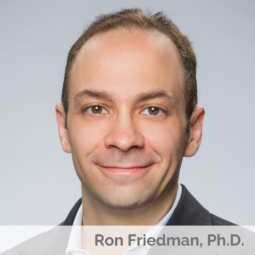
Ron Friedman, Ph.D. is an award-winning social psychologist, bestselling author, and one of America’s leading voices on the Science of Success and Work/Life Mastery.
He has served on the faculty of the University of Rochester and has consulted for political leaders, nonprofits, and many of the world’s most recognized brands. Popular accounts of his research have appeared in major newspapers, including the New York Times, the Washington Post, the Boston Globe, the Globe and Mail, the Guardian, as well as magazines such as Harvard Business Review and Psychology Today.
In this episode of the Success Through Failure podcast, Ron reveals how Reverse Engineering paved the way to success for the likes of Steve Jobs, Bill Gates, Tim Ferriss, and J.K. Rowling, just to name a few.
He also delves into the topic of creativity vs originality— which begs the question: Do you need to be a creative genius to come up with something revolutionary like Apple’s Mac and Microsoft’s Windows?
There are so many practical tactics to take away from this episode that you surely don’t wanna miss! Tune in now!
Ep 535
Ep 523
Ep 514
